The landscape of remote work is undergoing a seismic shift. Gone are the days when securing a high-paying US-based contract required living in Silicon Valley or knowing the right hiring manager. Enter Mercor, an AI-driven vetting platform that is democratizing access to elite-level income for software engineers, data scientists, legal experts, and finance professionals globally. With reports of contracts paying anywhere from $60/hour to over $500/hour (annualizing to $100k–$500k+), Mercor represents the new frontier of the “Human-in-the-Loop” economy. However, accessing these opportunities requires passing a unique gatekeeper: The AI Interviewer. This comprehensive guide synthesizes insights from successful candidates, insider breakdowns, and the latest hiring trends to provide you with the blueprint for cracking the Mercor code. Whether you are a senior developer in India, a financial analyst in Europe, or a researcher in South America, this guide will walk you through every step of the process.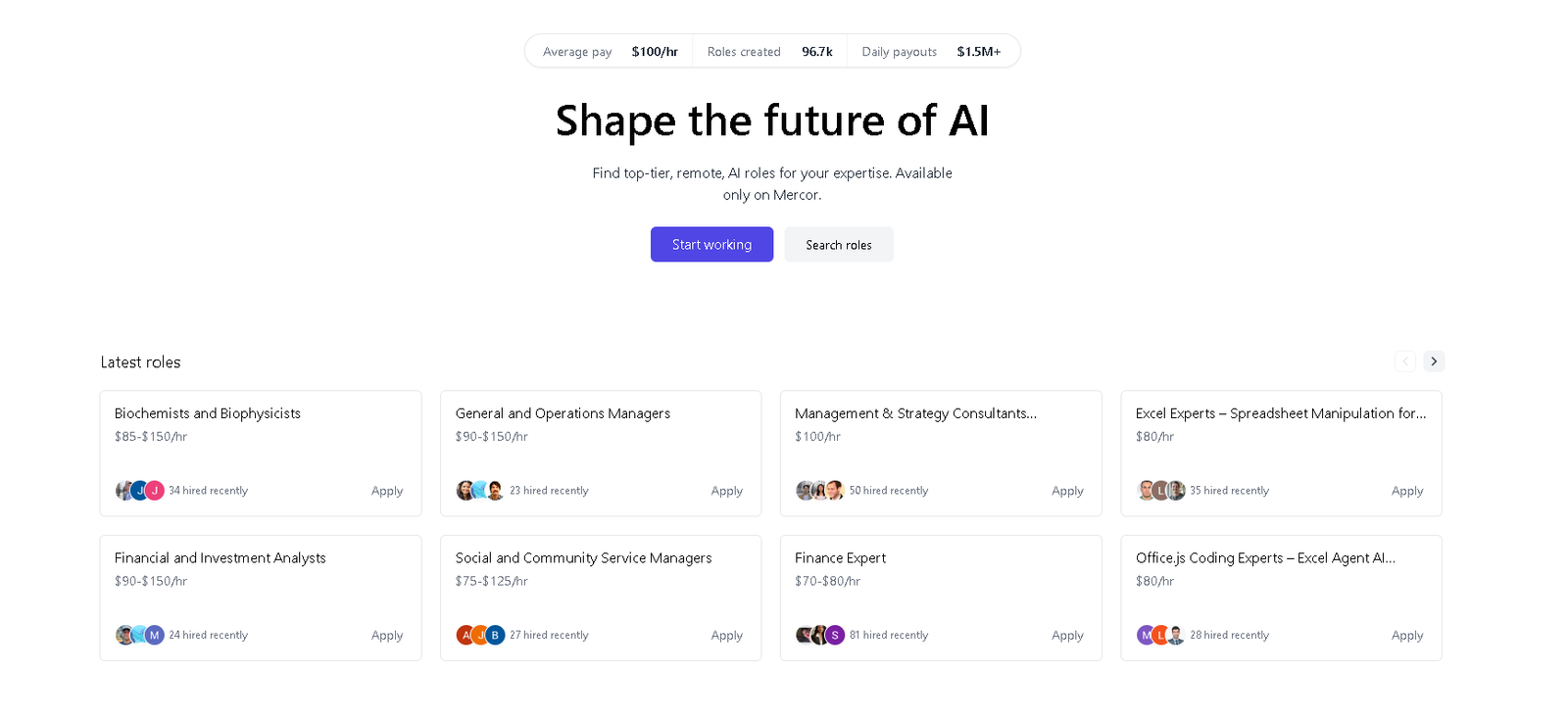
Key Takeaways about Mercor
The Opportunity: Mercor connects global talent with top US AI labs and tech companies. Compensation is significantly above market rates for remote work, often paid in USD.
The Gatekeeper: The initial screening is conducted entirely by an AI avatar. It is a 20-minute, high-intensity conversational interview that assesses technical competence, communication skills, and English proficiency. The Process: Resume Parsing → AI Video Interview → Take-Home Assignment (Role Dependent) → System Design/Expert Vetting → Team Matching.
The Strategy: Success requires “training” yourself to speak to an AI—prioritizing structure (STAR method), clarity, and explicit verbalization of your thought process over emotional rapport.
The “Human” Element: Despite the AI front-end, the ultimate goal is to work on projects that train the next generation of LLMs (Large Language Models), placing you at the forefront of the AI revolution.
Deep Dive: What is Mercor and Why Does It Pay So Well?
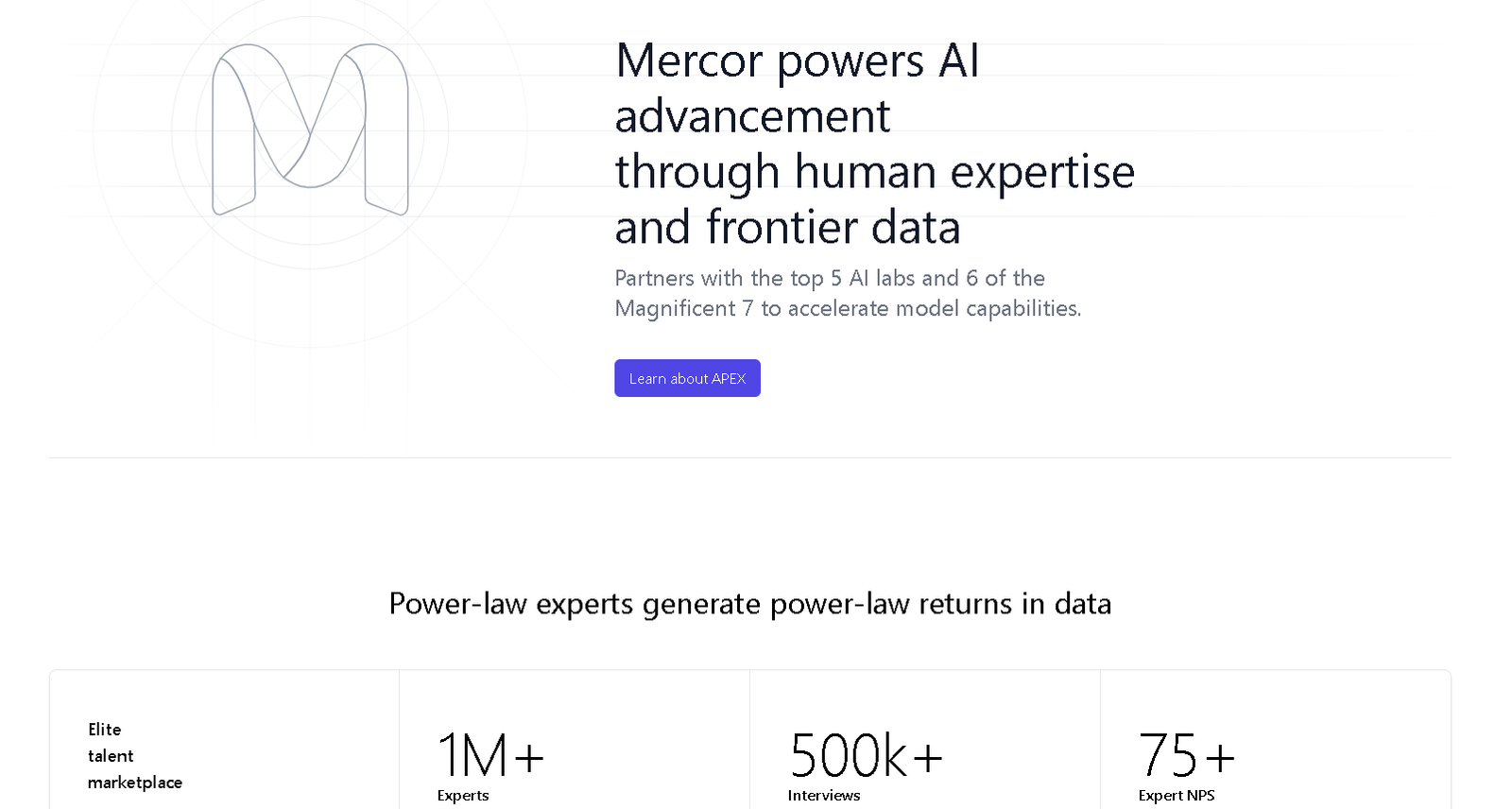
To understand why a platform would pay $100,000 to $500,000 a year for remote contract work, one must understand the current bottleneck in Artificial Intelligence development. We have moved past the era of simple “data labeling” (e.g., clicking on traffic lights in a captcha). AI labs like OpenAI, Anthropic, and Google DeepMind now need Expert Reinforcement Learning from Human Feedback (RLHF). They don’t just need data; they need reasoning. They need a senior software engineer to explain why a piece of code is inefficient, not just fix it. They need a lawyer to draft a complex argument, or a mathematician to solve a graduate-level proof. Mercor acts as the bridge, vetting these experts at scale using its own AI to reduce the friction of traditional hiring.
Global Arbitrage
Mercor’s value proposition is simple: Talent is equally distributed, but opportunity is not. By
using an AI interviewer that eliminates bias related to accent, location, or university pedigree
(to an extent), they can identify a brilliant engineer in a small town who is just as capable as a Stanford grad. Because the end-clients are top-tier US firms with massive AI budgets, they are willing to pay US-standard rates, which translates to fortune-changing income for international talent.
“Mercor is not just a job board. It is a meritocratic engine. If you can prove your skills to the AI, you get the job. No networking, no cover letters, no corporate politics.”
Phase 1: The Application and Resume Optimization
The first step in the Mercor ecosystem is the resume upload. Unlike traditional Applicant Tracking Systems (ATS) that look for simple keyword matches, Mercor’s AI is looking for signals of expertise.
Structuring Your Resume for AI Vetting
Based on the analysis of successful applicants, your resume needs to be optimized for machine interpretation. The AI is scanning for depth, not fluff.
Tech Stack Specificity: Do not just list “Python”. List “Python (AsyncIO, PyTorch, Django ORM)”. The AI builds a knowledge graph of your skills.
Quantifiable Impact: “Improved database performance” is weak. “Reduced query latency by 40% by implementing Redis caching on high-traffic endpoints” is strong. The AI parses these causal relationships.
Project Complexity: Highlight projects that involve system design and scalability. Mentions of “distributed systems,” “microservices architecture,” and “high-availability” trigger
higher tier classifications.
Pro Tip: Ensure your LinkedIn profile matches your resume perfectly. Mercor often cross-references these data points to verify identity and consistency before even inviting you to an interview.
Phase 2: The AI Video Interview (The Core Hurdle)
This is the stage where most candidates fail. You will face a 20-minute video call with an AI
avatar. It looks like a human (sometimes uncanny valley), sounds synthesized, and asks rapid-fire questions.
How the AI “Thinks”
The AI interviewer is likely built on a large language model (LLM) fine-tuned for recruitment. It
is evaluating you on three axes:
1. Content Accuracy: Did you give the correct technical answer?
2. Communication Structure: Did you ramble, or was your answer logical and concise?
3. English Proficiency: Can you articulate complex abstract concepts fluently?
Strategies to “Hack” the AI Interview
1. The “Pause and Plan” Technique
Unlike a human, the AI does not get awkward silence. If you need 5 seconds to structure your thought, take it. However, it is better to narrate your pause. “That is an interesting question regarding the CAP theorem. Let me structure my answer by first addressing Consistency…” This shows the AI that you are processing, not stalling.
2. Verbalize the STAR Method Explicitly
When asked behavioral questions (e.g., “Tell me about a time you handled a difficult bug”), do not just tell a story. Structure it so clearly that an algorithm can parse it:
Situation: “In my previous role at X, we faced a 50% drop in API throughput.”
Task: “My task was to diagnose the bottleneck without causing downtime.”
Action: “I implemented distributed tracing using Jaeger and identified a locking issue in the
database layer.”
Result: “This fix restored throughput and increased stability by 20%.”
3. Optimize Your Environment
The AI is also analyzing audio quality and potentially facial engagement.
Audio: Use a high-quality noise-canceling microphone. Background noise can confuse the
speech-to-text engine, leading to “hallucinated” wrong answers in your transcript.
Lighting: Ensure your face is clearly visible.
Eye Contact: Look at the camera, not your screen. This registers as “engagement” in many video analysis algorithms.
Common Questions to prepare for Software Engineers:
“Explain the difference between TCP and UDP to a 5-year-old.”
“How would you handle a situation where a production database is locked?”
“What are the trade-offs between SQL and NoSQL?”
“Describe a complex system architecture you designed.”
For Non-Tech Roles (Finance/Legal):
“Walk me through your process for analyzing a balance sheet.”
“How do you stay updated with the latest regulatory changes in [Region]?”
Phase 3: The Technical Assessment & Case Studies
If you pass the conversational AI screen, you move to the hard skills testing. This varies
significantly by role.
The Take-Home Assignment
Candidates report receiving a 48-to-72-hour window to complete a specific task.
Example for Devs: “Build a simplified version of a URL shortener backend.”
Example for Data Scientists: “Clean this dataset and build a predictive model for housing prices.”
Crucial Strategy: The AI (and human reviewers) are looking for code quality over speed.
Include comments explaining why you made certain choices. Write unit tests. (This is a major
differentiator). Include a README file that documents how to run the code and the architectural decisions made. Successful candidates often finish these tasks in 24 hours but spend the remaining time refactoring and documenting. This attention to detail signals “Senior Engineer” status.
The System Design Round
For higher-paying roles ($100k+), you will likely face a System Design interview. This might be with a human expert or a highly advanced AI agent.
The “HEART” Framework for System Design:
Hear the problem: Clarify requirements (DAU/MAU, latency requirements).
Estimate: Do back-of-the-envelope calculations for storage and bandwidth.
Architecture: Draw the high-level diagram (Load Balancers, DBs, Caching).
Refine: Identify bottlenecks (Single Points of Failure).
Trade-offs: Discuss consistency vs. availability (CAP theorem).
Phase 4: Detailed Analysis of the “Mercor” Phenomenon
The “AI Paradox”
There is a fascinating irony at the heart of Mercor. You are being interviewed by an AI to get a job training an AI. This creates a feedback loop: The better you are at your job, the smarter the AI becomes, potentially automating the lower tiers of your profession. However, Mercor focuses on the frontier of knowledge. The AI needs to learn novel reasoning, which means the demand for true experts is actually increasing, not decreasing.
Remote Work vs. “Cloud Labor”
Mercor is shifting the paradigm from “Remote Work” (employment) to “Cloud Labor” (high-frictionless contracting).
Pros: immense flexibility, high pay, meritocratic entry.
Cons: less stability than full-time employment (though long-term contracts exist), lack of
traditional benefits (healthcare/insurance depending on country), and isolation.
The Cheat Detection Mechanisms
A word of warning: Because the interview is remote and AI-led, the temptation to use tools like ChatGPT or Otter.ai to generate answers in real-time is high. Do not do this.
Mercor’s platform likely employs:
Gaze Tracking: Detecting if you are reading off a different screen.
Response Latency Analysis: If you answer a complex question instantly (because you pasted it into GPT), or if there is a delay consistent with typing, it flags you.
Voice Stress Analysis: While speculative, some advanced interviewing AIs monitor vocal patterns for deception.
The “Hacks” mentioned in some videos (using transcription tools) should be used strictly for
record-keeping and self-review, not for real-time cheating. The risk of being blacklisted from a platform paying $500/hr is not worth it.
Conclusion
Mercor AI represents a watershed moment for the global workforce. It is stripping away the
gatekeepers of geography and pedigree, leaving only raw skill and communication ability. For the prepared candidate, this is the most lucrative opportunity of the decade.
To succeed, you must treat the AI interview not as a formality, but as a technical challenge in
itself. Optimize your input (speech/resume), understand the algorithm’s objective (finding clear, structured reasoning), and demonstrate the depth of expertise that current AI models lack. The future of work is here, and it is hiring.
Frequently Asked Questions (FAQ)
1. Is Mercor AI legitimate?
Yes. Mercor is a Y-Combinator backed company. They work with legitimate US tech firms and AI labs. Thousands of engineers and professionals worldwide are currently receiving payouts via the platform.
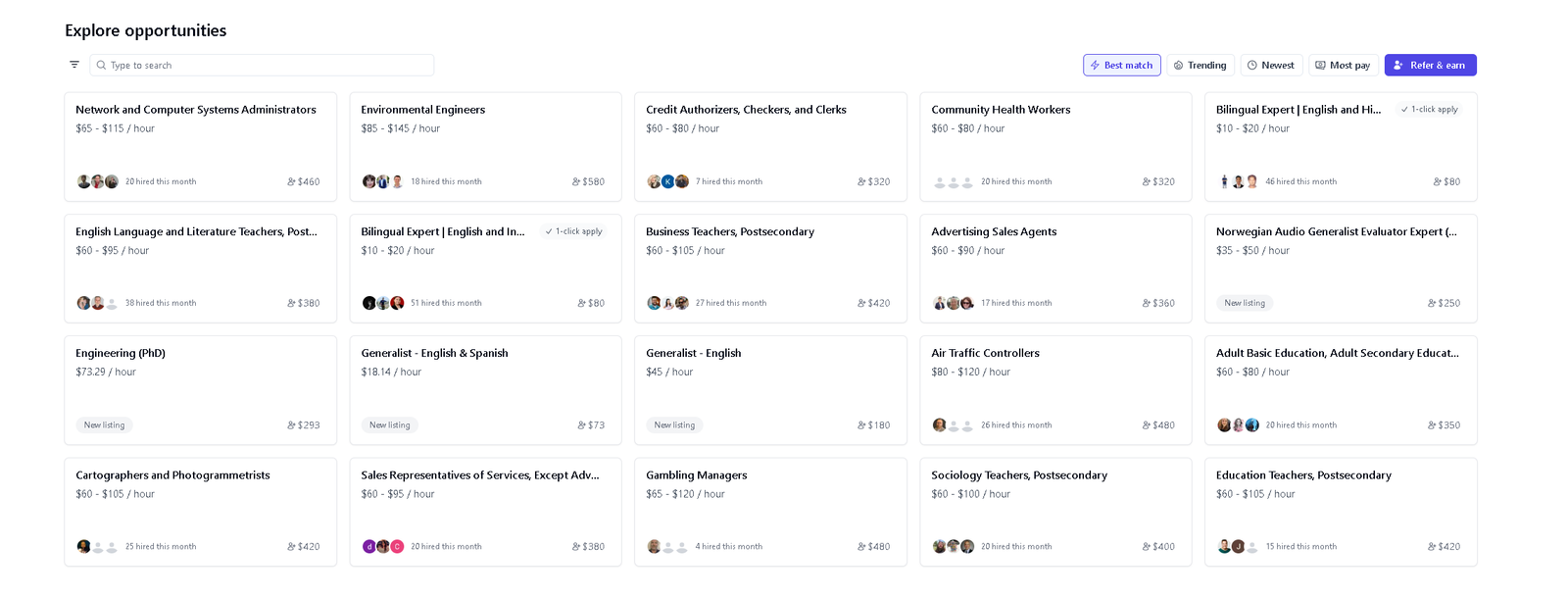
2. How much does it actually pay?
Pay varies by role and expertise level.
Junior/Mid-level: $20 – $40/hour.
Senior/Expert: $60 – $150/hour.
Niche Expert (AI/ML/Specialized Law): $200 – $500+/hour.
Payments are typically made in USD via international transfer services (like Wise or Mercury).
3. Can I apply if I am not a programmer?
Absolutely. While software engineering is a huge vertical, there is growing demand for:
Creative Writers (for RLHF on creative writing models).
Lawyers (for legal reasoning models).
Financial Analysts (for financial data interpretation).
Math/Science Tutors (for STEM reasoning).
4. What happens if I fail the AI interview?
Currently, you may be allowed to re-apply after a cooling-off period (usually 3-6 months), or if you significantly update your profile with new skills. However, it is best to prepare thoroughly to pass on the first attempt as the “first impression” data sticks.
5. Is this a full-time job?
Technically, most roles are contractor positions. This means you are responsible for your own taxes and benefits. However, many contracts are “full-time equivalent” (40 hours/week) and can last for years.
You can check the current job offers at the official Mercor site.
(Disclaimer: We may receive a commission if you join through this link, at no extra cost to you. This helps support our testing of AI tools.)